
June 2026
June saw tensions in the Middle East ease as a ceasefire was reached and the Strait of Hormuz reopened, sending oil prices and bond yields lower and taking some pressure off inflation concerns. US share markets reached fresh highs earlier in the month before a shift away from technology stocks left them little changed overall, while Australian shares have yet to recover the ground lost in March’s sharp fall.
At the time of writing, the ceasefire is under significant strain, with the United States and Iran exchanging fresh strikes and oil prices rising again.
Economic conditions
The Reserve Bank of Australia held the cash rate at 4.35% during June, having raised it three times earlier in the year, as the retreat in oil prices eased some of the near-term inflation risk. Australian inflation slowed to 4.0% in the year to May. Consumer and business confidence softened over the month amid Middle East tensions. A proposed change to capital gains tax on property also weighed on sentiment, with the share of homes selling at auction falling below 50% for the first time since the pandemic.
Overseas, the US Federal Reserve held interest rates steady even as inflation remained elevated at 4.2%, its highest level in three years, while Europe moved the other way, raising rates for the first time since 2023.
Equities
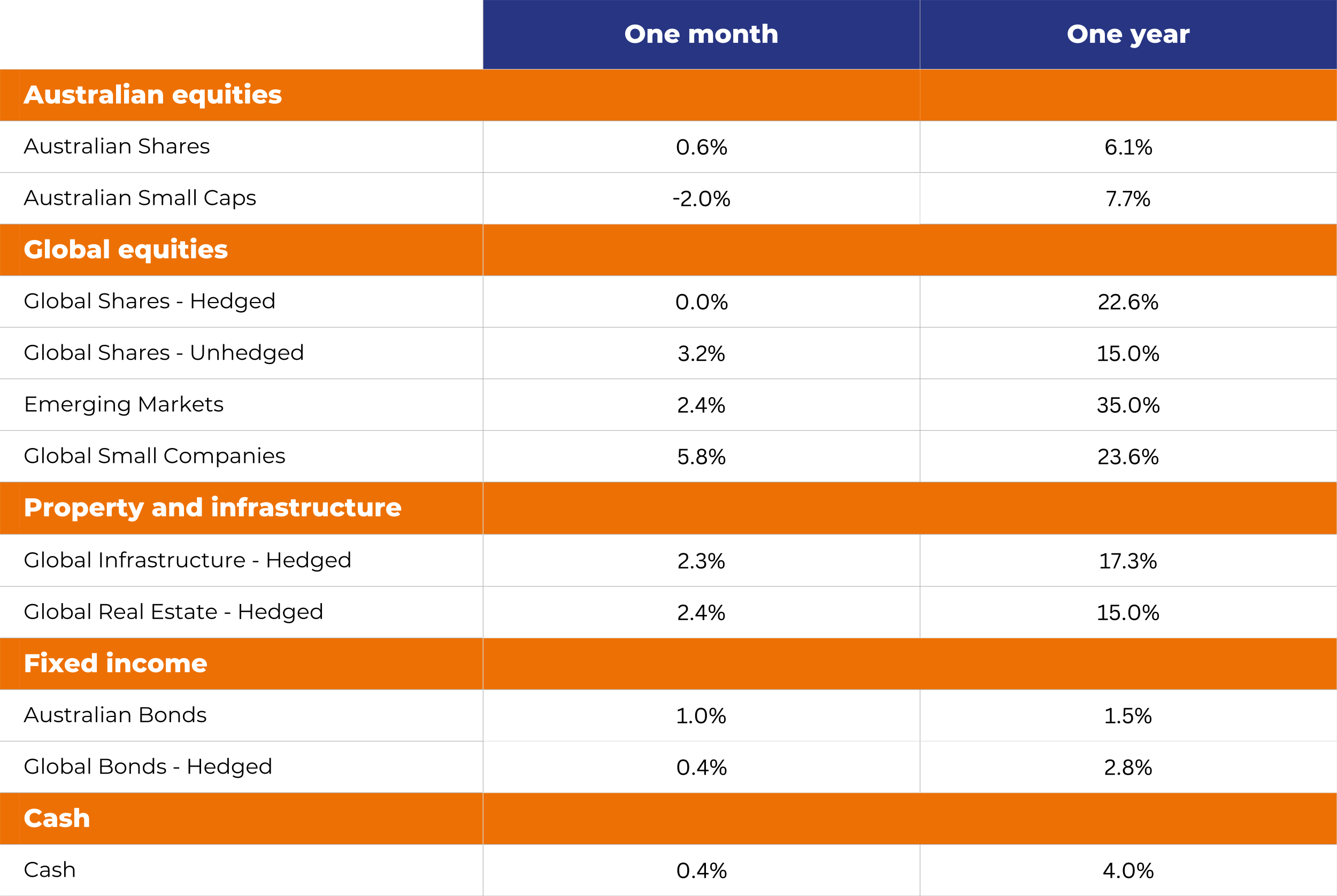
Global shares held with currency protection in place returned 0.0% for the month, while unhedged returns gained 3.2% as a weaker Australian dollar lifted offshore returns. Concerns about AI spending and rising memory chip costs prompted a shift out of technology stocks and into broader parts of the market during June, with global small companies the biggest beneficiary, up 5.8% for the month. Emerging markets also gained, up 2.4% for the month, while European shares rose 4.5%.
Australian shares rose 0.6% for the month, taking the financial year return to around 6%, with resources responsible for nearly all of the gains. Leadership within the local market reversed late in the month, as healthcare shares rebounded from a multi-year low while materials stocks eased around 9% over the final fortnight. Australian small companies fell 2.0% for the month.
Fixed interest
Bond yields eased during June as oil prices retreated and investors pared back expectations of further Reserve Bank rate rises. Australian bonds returned 1.0% for the month and global bonds (hedged) 0.4%.
With interest rates now considerably higher than they were just a few years ago, investors holding bonds and cash continue to earn a solid level of income.
Winners and losers
Most major asset classes gained in June. Global small companies led the way, up 5.8%, while global infrastructure, with direct exposure to global energy and shipping trade, gained 2.3% as the Strait of Hormuz reopened. Listed property also benefited, up 2.4%, and has now returned 15.0% over the past year. Emerging markets were the strongest performer over the past year, up 35.0%.
Commodities went the other way. Gold fell 8.0% as the ceasefire reduced safe-haven demand and the US dollar strengthened, though it remains up 15.6% over the year. Oil dropped around 20% to USD 72 a barrel, as the reopening of the Strait of Hormuz unwound the earlier rise in prices.
Asset class returns – June 2026
Built to navigate change
June ended with markets calmer than they began, as the ceasefire held and oil and bond yields pulled back from their highs. However, market conditions can change quickly, and it is important to remain invested in a portfolio built to navigate a range of outcomes, not just one.