
July 2026
The US and Iran resumed hostilities in July as June’s ceasefire broke down, sending oil prices sharply higher before easing late in the month. Separately, growing doubt about whether heavy spending on artificial intelligence will pay off triggered a sharp pull-back in technology shares. Asian markets were most impacted, with South Korea’s share market falling around 20% for the month, driven almost entirely by a small number of semiconductor companies. Australian shares were largely insulated from both, extending their gain to a fourth consecutive month. This was helped by an index that leans more toward energy and financial companies than technology.
At the time of writing, both sides have reportedly resumed talks, and while reports suggest a resolution may be close, the situation remains fluid.
Economic conditions
The Reserve Bank left the cash rate unchanged at 4.35% at its August meeting, having not met in July. Headline inflation eased to 3.8% in June, down from 4%, while unemployment remained at relatively low levels. The Bank continues to weigh signs of easing inflation against price pressures that have not fully gone away, and has signalled that a further increase later in the year remains possible if inflation does not continue to soften.
In the United States, the Federal Reserve also held rates steady under its new chair, whose limited public guidance has left financial markets uncertain about the path ahead.
Equities
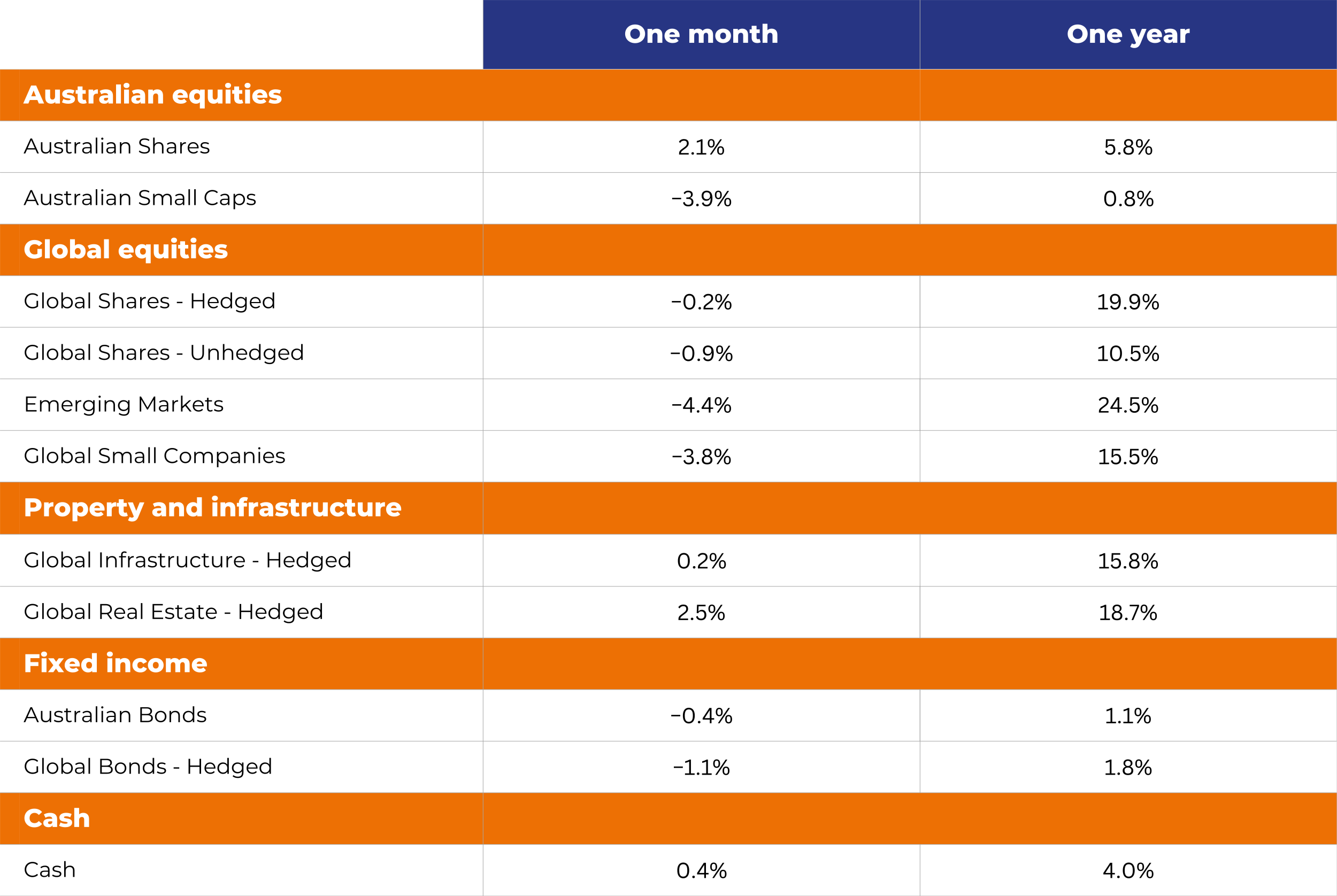
Global shares held with currency protection in place returned −0.2% for the month, while unhedged returns returned -0.9%, as a stronger Australian dollar reduced the value of offshore returns. The shares that had performed best over the past year were also the hardest hit during July, with the sell-off concentrated in computer chip makers in South Korea and Taiwan, as well as large US technology companies. US shares overall ended the month little changed, as strength elsewhere offset the weakness in technology. Global small companies and emerging markets fell 3.8% and 4.4% respectively for the month, caught up in the same pull-back, though both remain up strongly over the past year.
Australian shares rose 2.1% for the month, helped by rising energy prices and a rotation by investors into steadier, dividend-paying companies such as banks. Energy, financials and healthcare led the gains, while materials, technology and utilities lagged.
Fixed interest
Australian bonds returned −0.4% for the month and global bonds (hedged) returned −1.1%. Rising oil prices renewed concerns about inflation, raising expectations that interest rates could stay higher for longer, which pushed bond yields up and prices down.
With interest rates well above where they sat a few years ago, investors holding bonds and cash continue to earn a healthy level of income.
Winners and losers
Investors grew more cautious in July, favouring companies and assets seen as safer or steadier, while pulling back from segments of the markets seen as riskier or more growth-focused.
Emerging markets and global small companies fell for the month, as did Australian small companies, down 3.9%.
Along with Australian shares, global real estate and global infrastructure were among the winners. Real estate rose 2.5% for the month and is now up 18.7% over the past year, while infrastructure added 0.2%, taking its one-year return to 15.8%. Global infrastructure has continued to benefit from the real-world demand for electricity and buildings needed to support artificial intelligence, even as investors grew more cautious about the technology companies driving that spending.
Asset class returns – July 2026
Importance of diversification
July served as a reminder that the market sentiment can shift quickly and the investments delivering the strongest returns can just as quickly give back some of their gains. As this month showed, having a mix of investments helps cushion those swings, underlining the importance of diversification.